Were all those skeletal victims we see in WWII photos “gassed to death”—or is there more to the story?
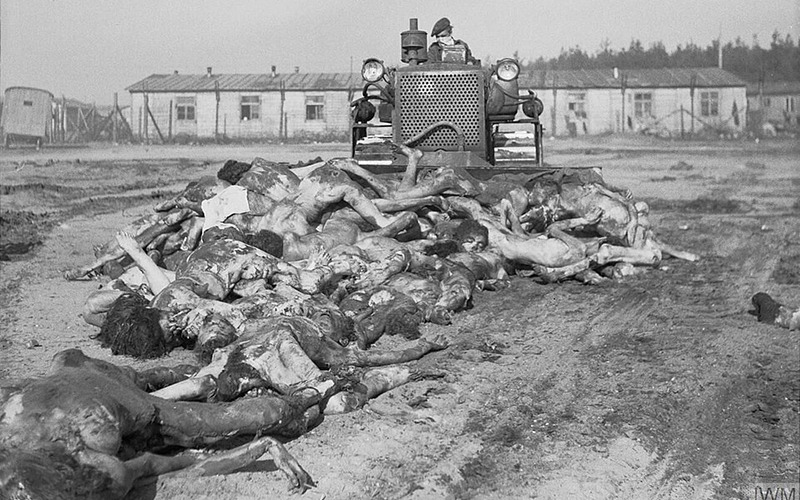
The Bergen-Belsen concentration camp, located in northern Germany, generated the haunting imagery which is now most often associated with “the Holocaust.” The photographs and films of piles of emaciated bodies, often being bulldozed into mass graves by British liberators, are now the most commonly used imagery associated with World War II concentration camps.
In reality, Bergen-Belsen was not the site of “gas chambers” or any sort of systematic mass execution. The widespread impression that the dead at Belsen were victims of “gassing” is a misconception that overshadows the true causes of the camp’s shocking appearance in 1945: the devastating disease of typhus.
These images of piles of skeletal corpses have been used to fuel an assumption of “gas chambers,” but the reality is that these awful scenes were the product of disease, overcrowding, and the collapse of Germany’s logistics and food supply network due to the Allied mass bombing campaign. [Read the entire article as PDF.]
Taken from The Barnes Review, September / October 2025, Volume XXXI, Number 6.