
Claims of “cultural appropriation” from a Mexican Indian tribe are part of an elaborate hoax that falsely attributes European-origin technology and culture to the non-European world.
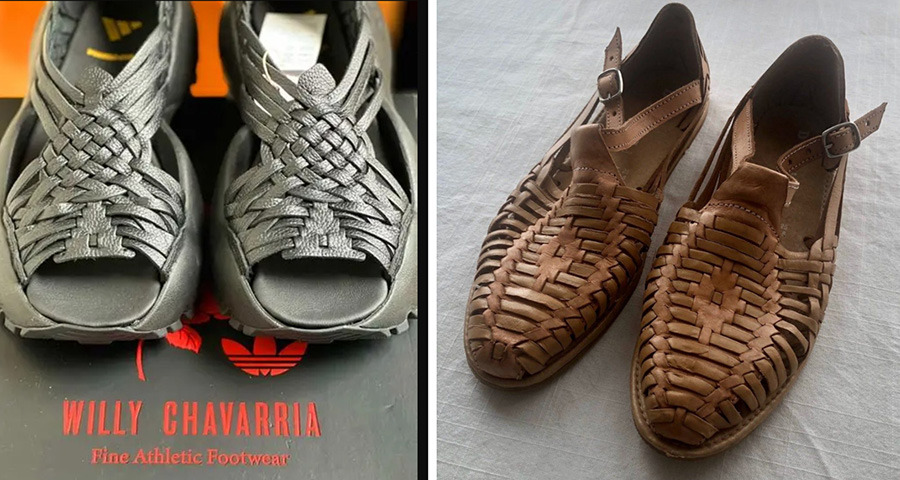
In the latest case, a “Mexican-American” designer for Adidas, Willy Chavarria, admitted to producing sandals for Adidas that closely resemble the Huarache sandal, a leather-woven sandal crafted by artisans in Oaxaca, Mexico.
According to Espiritu, one of the companies involved in distributing the Mexican sandal design, the Huarache sandal represents “the history of the first shoe ever invented!”
This situation has escalated into a widely reported claim of “cultural appropriation” by Adidas. The Jewish president of Mexico, Claudia Sheinbaum, announced that Adidas agreed to meet with Oaxaca authorities to address the issue. “It’s collective intellectual property. There must be compensation. The heritage law must be complied with,” Sheinbaum stated during a press conference.
In reality, the oldest leather shoe in the world, dating to 3500 BC, was discovered in the Areni-1 Cave Complex in Armenia.
The second-oldest leather shoes, from approximately 1000 BC, were found on the remains of “Ötzi the Iceman,” a frozen mummy discovered on the Austria-Italy border in the Alps.
The third-oldest leather shoes, approximately 2,000 years old, are Roman sandals and boots, often preserved in waterlogged sites such as Vindolanda Fort on Hadrian’s Wall in Britain.
Although Huarache-style shoes are pre-Colombian in origin, their history extends back only a few hundred years, not thousands, and they are not the “first shoes.”
Furthermore, images of the Huarache shoes allegedly “culturally appropriated” reveal reinforced soles and heavy sewing machine stitching, which are clearly of European industrial origin.
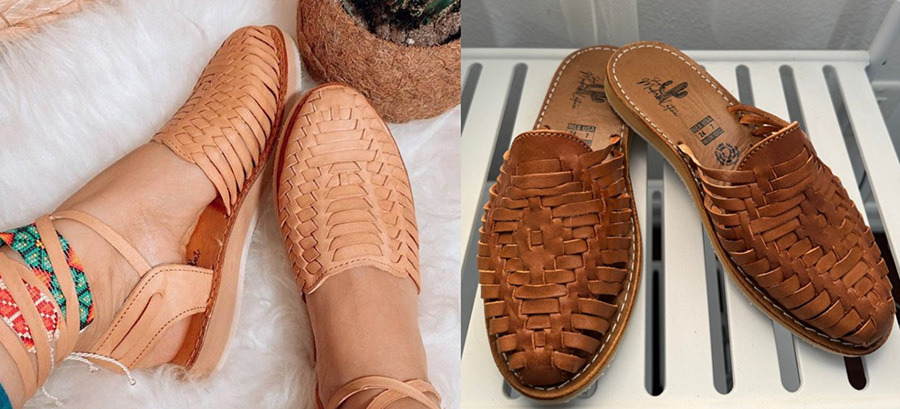
What occurred is that Chavarria allegedly replicated the basic woven top design of the modern Huarache sandal and presented it to Adidas as his own. This constitutes modern copyright infringement, not “cultural appropriation.”
The media’s intense coverage of the case as “cultural appropriation” is part of a broader campaign that falsely claims items or cultural elements used by Blacks and Hispanics have been “stolen” by Whites.
Prominent examples of such claims include:
– Hairstyles, such as Whites braiding their hair in dreadlocks (“Cultural Appropriation is Everywhere. But Is It Always Wrong?” Time Magazine, September 21, 2016),
– The use of Black slang in marketing (“An influencer got backlash for claiming Black slang terms belonged to internet culture. It highlights a common problem online,” Business Insider, August 8, 2020),
– TikTok dances (“Tik Tok’s Black Dancers are on Strike,” The Washington Post, June 25, 2021),
– “Pop stars” adopting “hip-hop aesthetics” (“Miley Cyrus’s twerking routine was cultural appropriation at its worst,” The Guardian, August 27, 2013), and
– “Nail aesthetics,” such as acrylics and nail art associated with Black women being used by non-Black celebrities (“Nail Art Is Bigger Than Ever — So Why Aren’t Black Women Getting Any Credit?,” Refinery29, April 15, 2019).
These examples are among the more absurd claims of “cultural appropriation.”
Many others exist, but all share the same fundamental error: every means by which these cultural forms are created—electricity, computers, writing, machinery, chemistry, and so forth—relies on technologies of White origin.
The only genuine case of “cultural appropriation” is from Whites, not the reverse.