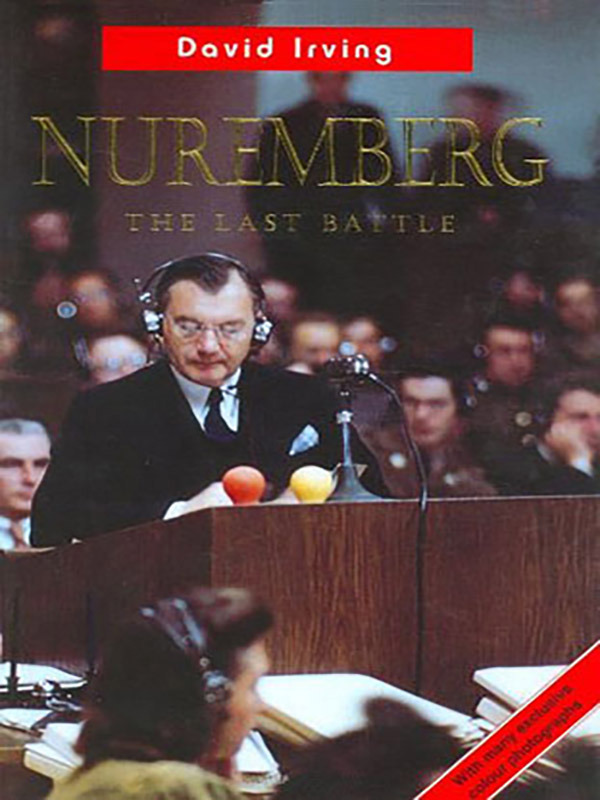
By David Irving. By agreement of the Allied powers, major German and Italian leaders were to be identified as war criminals, tried, prosecuted, found guilty by whatever means and punished.
The war crimes trials at Nuremberg were rigged to prove the triumph of good over evil. There would be few if any crimes listed on the indictment at Nuremberg of which all of the four prosecuting powers were not guilty themselves.
The book examines the Nuremberg Trials of 1945–1946, which prosecuted major Axis war criminals after World War II. Irving draws on private papers and exclusive diaries of the trial’s principal actors, including judges, lawyers, and the defendants themselves, to provide a close-up view of the proceedings. He portrays the trials as a complex struggle, highlighting the moral ambiguities and contradictions faced by the Allied powers, noting that many crimes listed in the indictments were also committed by the prosecuting nations
The narrative emphasizes the human and political dimensions of the trial, set against the backdrop of a city scarred by war. The book presents the trials as a “Trial of the Century”, exploring the legal, ethical, and political challenges faced by the Allied prosecutors, particularly Robert H. Jackson, the Chief Counsel for the United States.
Irving emphasizes the unpublished diaries and papers to argue that the trials were not entirely impartial, suggesting that the Allies themselves were guilty of actions similar to those they prosecuted. The work includes many unpublished color photographs and detailed accounts of courtroom proceedings
Hardback, 377 pages