By Arthur Kemp. The science of modern DNA analysis—as used by all the popular home DNA testing kits—has definitively proven that race is a biological reality and that racial differences are genetic in origin.
This science has overturned decades of far-left propaganda that has claimed all races are “99% identical” and the even more idiotic claim that “race is a social construct.”
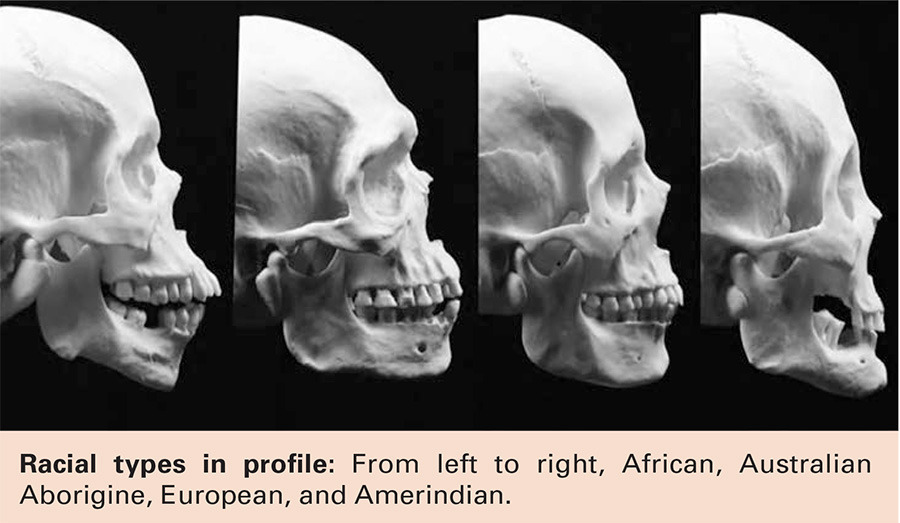
This misrepresentation occurs even though, as will be shown here, there is overwhelming consensus among geneticists and scientists that there are indeed clearly identifiable genetic differences between groups of people.
Many medical treatments—such as bone marrow transplants, as one example—are exclusively dependent upon genetic compatibility.
THE DOUBLE HELIX AND PCR ANALYSIS
Although scientists long suspected the existence of molecules that controlled hereditary attributes, it was only with the 1953 revelation of the double helix model of DNA structure by James Watson and Francis Crick that DNA replication and its role in heredity was finally revealed. (1)
In 1983, the American biochemist Kary Mullis invented polymerase chain reaction (PCR), a groundbreaking technique that revolutionized molecular biology. This breakthrough made it possible to create millions of copies of specific DNA sequences, which provided the breakthrough needed to start developing ancestry trait determination.
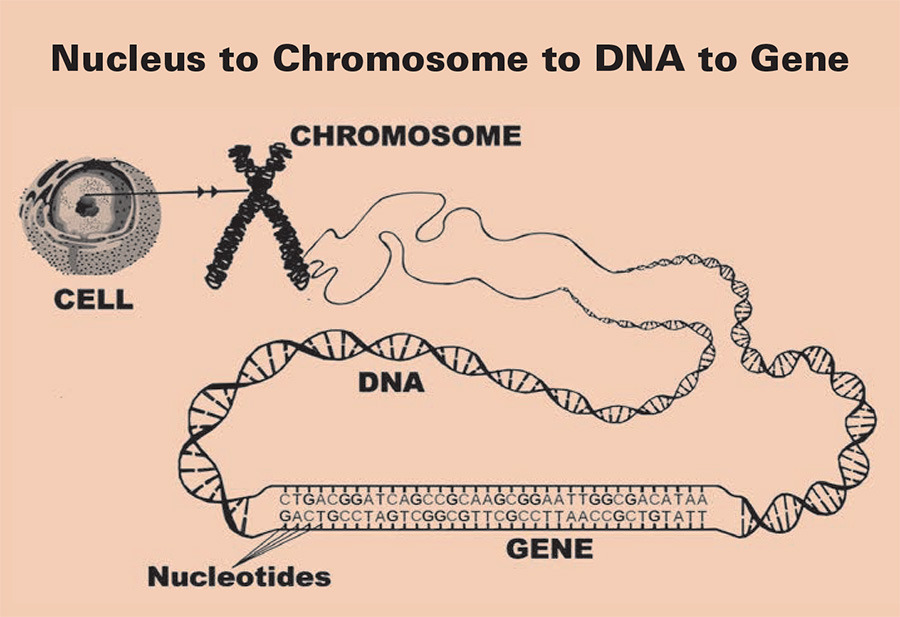
HUMAN DNA STRUCTURE
The structure and functioning of human DNA are relatively simple and only appear confusing due to the use of often needless acronyms.
At the core of human DNA is the cell, a tiny organism about 0.00004 of an inch or one thousandth of a millimeter in size. There are 30 trillion cells in an average human body.
Inside each cell is a nucleus, that contains three important components:
1. Sugar molecules, known as deoxyribose and ribose. These two molecules differ from each other in terms of the numbers of respective carbon, nitrogen, and oxygen atoms;
2. Phosphate molecules; and
3. Five chemicals called base pairs, referred to as nucleobases. These are Adenine (represented by the symbol (A), Cytosine (C), Guanine (G), Thymine (T), and Uracil (U).
When these base pairs (A, C, G, T, or U) combine with one of the two types of sugar molecules, they are called “nucleotides.”
When these nucleotides form long chains, they are called “polynucleotides.”
When two of these polynucleotide strands twist around each other, they form a double-stranded helix, or double helix.
This is the “twisted ladder” structure, which is the most widely known representation of DNA and genetics. The acronym DNA is short for Deoxyribonucleic acid.
The use of the term twisted ladder is particularly helpful in explaining where the base pairs are located—they are the stairs or rungs of the DNA ladder.
This four-letter “alphabet” (A, T, G, and C) is arranged in specific formats, which are called codons. These codons create the specific amino acids that in turn “order” the body to create physical forms.
It is therefore the order in which four of these bases (A, T, G, and C) are placed that constitutes the genetic code of a human.
Another of the human cell’s components is a fluid that surrounds the nucleus called the cytoplasm. This fluid contains Ribonucleic acid, or RNA.
Just like DNA, this RNA is made up of a chain of nucleotides, except that it has the nucleobase Uracil (U) instead of Thymine (T). RNA also has only a single-strand structure, folded in on itself, and does not have the double or ladder structure of DNA.
RNA’s purpose is to control the process through which proteins are generated (using a system called messenger RNA or mRNA, transfer RNA or tRNA, and Ribosomal RNA). RNA also controls the process known as gene regulation, which controls when, how, and how much of a gene is expressed (activated).
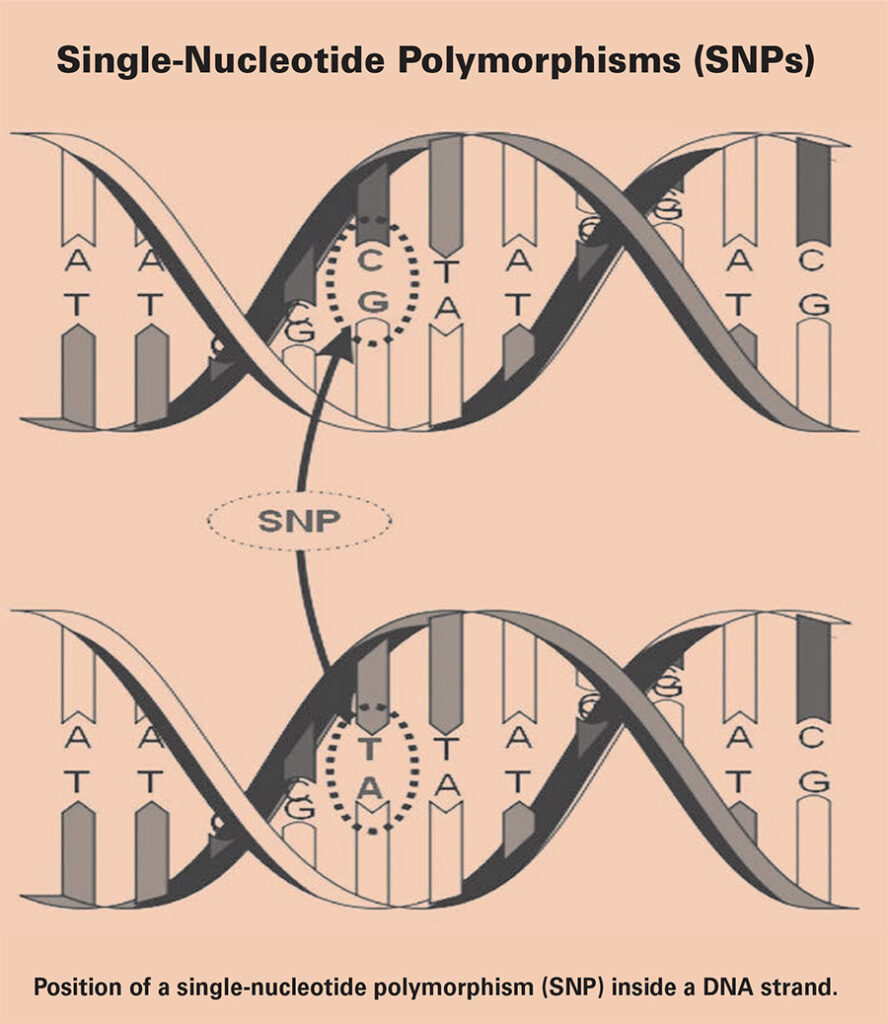
Single Nucleotide Polymorphisms (SNPs) represent differences in a single DNA building block, called a nucleotide.
The four nucleotides—adenine A, cytosine C, guanine G, and thymine T—form chemical bonds called base pairs which connect the two sides of the DNA ladder or double helix.
It is variations in the connecting order of these base pairs that cause physical differences between individuals.
When individuals share enough common traits, they form a related and physically uniform group, called a race.
CHROMOSOMES
A chromosome is a strand of DNA (that is, chains of polynucleotides in the twisted ladder formation) combined with proteins and packed tightly into self-containing units.
All humans have two pairs of sex chromosomes—the DNA strands that determine whether that individual is a male or female, and two pairs of 22 chromosomes that determine everything else about that individual.
The DNA molecules inside a chromosome are tightly wound around proteins (called histone proteins) that compress the DNA strands and help to determine how they behave.
There are five basic histone proteins, named H1 to H5.
GENES
A gene is made up of a series of nucleotides on a DNA strand at any specific place on a chromosome.
In other words, genes are areas on the chromosomes that are in control of certain functions.
There are at least 20,500 genes in a human, and these genes vary in size between a few hundred DNA bases to more than 2 million bases.
Each individual has two copies of each gene, one inherited from each parent.
The actual location of a gene on a chromosome is called a locus (loci in plural).
ALLELES
When any one of two or more genes occur at a given site (locus) on a chromosome, they are called alleles.
Alleles may occur in pairs, or there may be multiple alleles affecting the “expression” of a particular trait.
This is called the genotype, or the genetic constitution of an individual.
If the paired alleles are the same, the genotype is called homozygous, and, if they are different, the genotype is called heterozygous.
An allele is therefore a variant form of a gene.
An allele is called “dominant” when it overrides the traits of other alleles in a heterozygous pairing.
When an allele is recessive, it means that it will always be overridden by a dominant allele in any heterozygous pairing.
Alleles are of vital importance in human genetics. They play a major role in determining the traits of an individual, both physical and psychological.
These trait-determining alleles may occur in pairs or be in multiple arrays. No matter how they are linked, it is these alleles that determine the expression of the gene: in other words, how it is shaped and created.
When this expression takes the form of the physical appearance of a trait, the result is known as a phenotype.
This is the outward physical appearance of that individual.
SINGLE-NUCLEOTIDE POLYMORPHISMS (SNPS)
A single-nucleotide polymorphism (abbreviated to SNP, and often spoken of as a “snip”) is the name given to the point where nucleobases (A and C, or G and T) link up.
Each and every SNP represents a difference in a single nucleotide.
This can, for example, mean the replacement of the C nucleotide with the T nucleotide in a certain stretch of DNA. This change then alters the entire expression or output of that particular gene.
The manner in which these base pairs combine is the origin of genetic differences between people and races.
The human genome contains approximately 3 billion base pairs, and the number of possible combinations is huge: 4 to the power of 3 billion.
It is at this level of the genome that genetic diversity is created.
Different genes arise from specific sequences of these base pairs, and the diversity in base arrangements drives the creation of unique proteins, and, therefore, all human traits.
SNPs are thus the generators of phenotypes: they cause the creation of different physical forms and psychological differences that manifest themselves as racial groups.
SNPs are the primary tool used by DNA tests in ancestry determination, because individuals from closely related groups have similar SNPs.
This means that the more closely related individuals are, the more SNPs they will have in common.
HAPLOTYPES: X, Y, AND MTDNA
Each human being possesses some alleles that always remain the same and are never subjected to any sort of change. These alleles are called haplotypes.
Two of these allele groups—the X and the Y—form chromosomes by themselves and are located inside the cell.
The X and Y chromosomes serve a primary function in determining the sex of the individual, with the X chromosome being the female chromosome and the Y chromosome being the male counterpart.
Y chromosomes are passed down unchanged from father to son and therefore contain valuable insights into the origin of that individual on his paternal side.
The X chromosome, however, also includes DNA from some of the female’s paternal ancestry and is therefore less reliable in determining a solely maternal ancestral descent.
This is where another group of alleles, known as mitochondrial DNA, or mtDNA, plays an important role.
Mitochondrial DNA is found outside the nucleus of the cell. The mtDNA serves primarily as the energy source for the cells. Because it is exclusively inherited through the female line, it serves the same purpose in tracking female ancestry in the same way that Y chromosomes do for the male.
Y- and mtDNA groups have been assigned alphabet designations in order to differentiate them from each other. In this way, Y chromosomes are named from A to R, and mtDNA haplogroups are named from A to Z.
When individuals are closely related to one another, they will share Y- or mtDNA groups, most likely from a single, or small group of ancestors.
They are therefore reliable indicators of line of descent—and therefore of an individual’s original founding group.
Y- AND MTDNA DO NOT DETERMINE APPEARANCE
Even though Y- and mtDNA haplogroups are passed directly from father to son and mother to daughter respectively, there is currently no evidence to indicate that they determine the overall physical appearance of an individual, and therefore what is perceived as a race.
Y- and mtDNA groups do, however, without question, indicate origins from specific areas, and these regions are in turn associated with specific “looks,” or phenotypes.
This is because, very often, those who have the specific Y- and mtDNA haplogroups also possess specific sets of autosomal DNA strands—which are the genes that do determine physical appearance and psychological characteristics.
It is, however, worth noting that there are many individuals who possess Y- or mtDNA haplogroups associated with a specific region but who do not share the phenotype, or look, associated with the geography of their haplogroup.
All this means is, somewhere in those individuals’ family trees, there has been admixture in the male or female line but their autosomal DNA has remained constant.
For example, the spread of the Indo-European language speakers from the steppes of Russia (and the region around the Black Sea) around 5000 B.C. impacted a region stretching from present-day Pakistan to Ireland, and from Scandinavia to Egypt.
Thus, the R (and specifically the R1a and R1b Y-haplogroups and their subclades) can be found in geographic regions, in varying quantities, from Pakistan to Ireland, even though the phenotype of the individuals in those regions varies considerably.
Y- AND MTDNA DIVIDE INTO SEVEN MAJOR GROUPS
When Y and mtDNA Haplogroups are grouped by their geographic origin—or, rather, their regions of greatest preponderance—they divide clearly into seven geographic regions.
These regions also correlate directly with the obvious racial groups:
1. Africa (sub-Saharan)
Racial group name: Negroid
• mtDNA Haplogroups: I, L, U3, U6;
• Y-DNA Haplo groups: A, B, and E (M40, M96).
2. Region: East Asia
Racial group name: Mongoloid
• mtDNA Haplogroups: B, C, D, E, F, G, R11, Y, and Z;
• Y-DNA Haplogroups: C (M217), D, N, O, and P.
3. Region: Central Asia
Racial group nam e: Indo-Iranoid
• mtDNA Haplogroups: M, R1–R9,
R30, R31, U6, U9, V, and W;
• Y-DNA Haplogroups: F, G (M201), H, K, and L.
4. Region: Middle East
Racial group name: Semitic
• mtDNA Haplogroups: J, N, R0a, and U7;
• Y-DNA Haplogroups: J, and T.
5. Region: Oceania
Racial group na me: Australoid
• mtDNA Haplogroups: O, P, Q, R12, R14, R21, R22, R23, and S;
• Y-DNA Haplogroups: M, S, and C1.
6. Region: Europe
Racial group name: Europid
• mtDNA Haplogroups: H, K, T, U1, U5, and U8;
• Y-DNA Haplogroups: I, and R.
7. Region: Americas
Racial group name: Amerindians
• mtDNA Haplogroups: A, B, C, D, and X;
• Y-DNA Haplogroups: Q.
(Each major haplogroup has several subclades, which are too numerous to list on the simplified list above.)
AUTOSOMAL DNA (ATDNA)
Autosomal DNA (atDNA) is all the DNA material that does not determine the sex of the individual, that is, everything that is outside of the Y- and mtDNA spectrum.
Autosomal DNA contains the SNPs, alleles, and the genes (which are merely defined groups of the latter two), and therefore is the genetic material that provides a wealth of information about an individual, or a group of individuals, including physical characteristics, and psychological traits such as behavior and intelligence.
Each of these traits are coded by a specific set of SNPs.
Individuals sharing a large amount of similar autosomal DNA are—obviously—closely related to one another. This is most commonly demonstrated in immediate families but also in larger groups, or tribes, of people.
Within any given group, there are often small variations (mutations) at the SNP level. When one of these variations occurs, the mutation is given its own category, or subgroup, which falls under the main haplogroup heading.
These subgroups are given the name subclades or clades.
The first letter of a subclade’s name will be the haplogroup alphabet name of its parent haplogroup, followed usually by a hyphen and the name of the SNP that is most different from the parent.
A practical example of this would be the Y chromosome called Haplogroup R. This haplogroup is divided into many subclades. Names of some of the subclades of Haplogroup R include R0a, R1, R1a, R1a1, R2, R3, R5, R5a, R5a1, R5a2, and so on.
Genetic data is therefore obtained via three sources: Y haplogroups, mtDNA haplogroups, and autosomal DNA (specifically the alleles and SNPs).
By studying these three components, it is possible to gain an accurate insight into the geographic origins of individuals, their physical appearance, and the characteristics of that individual, which include personality, cognitive ability, and so on.
RACE = VARIATIONS IN ALLELES AND SNPS
From the above overview, it can be correctly concluded that all humans share the same basic genetic structure: all humans have cells, the five base pairs, sugar and phosphate molecules, the twisted ladder structure, etc.
It is this commonality which has allowed the left to deceptively claim that there are “no genetic differences between the races.”
However, only the willingly blind will deny that groups of people differ in physical characteristics. No one in their right mind will claim that, for example, Chinese people look like Africans, or that Africans look like Europeans, and so on.
Given that there are clear and obvious physical differences between groups of people—and that these physical differences are perceived as races—the obvious question then arises: how are races, that is, groups of individuals with common physical and psychological characteristics, formed?
The answer to this question is surprisingly simple: it is the variation in individual genes at the SNP level that gives rise to the differences that are interpreted as races.
A gene (which, it will be recalled, is merely a collection of nucleotides on any given chromosome’s DNA strand) that codes for light skin, will, for example, be dominant in certain groups of people and be an inherited trait.
Conversely, a gene that codes for dark skin will be found in groups of people with dark skins, which is also an inherited trait.
Tall people will have the SNPs for larger skeletal structure, while intelligent people will have the SNPs that code for a higher IQ.
A group of individuals who are closely related will, for example, share the same SNPs for intelligence, height, or any other characteristic that is inherited.
Similarly, genes that code for specific eye colors, hair colors, hair textures, skeletal structures (which include skull shapes, bone densities, and bone lengths), and all of the other attributes by which race is identified, will be found in the individuals, and groups of individuals, who display those common traits.
These genes are always the result of specific arrays of alleles and specific SNPs. It is these DNA components that determine the outward expression of human genetics; in other words, how individuals are quite literally shaped and created.
When large numbers of individuals share similar gene expression (that is, alleles and SNPs), they will take on a uniform appearance.
This uniform appearance takes on the physical form of what is perceived to be a race.
These physical attributes—which are the result of gene expression—along with haplogroup categories, provide the genetic basis of all racial groups.
Autosomal DNA plays the dominant role in shaping the physical appearance of an individual.
When enough individuals share specific genes, they will have a similar appearance.
It is this “similar appearance” which presents itself as “race,” or “racial groups.”
It is the difference in these genes, or, more directly put, the difference in the way that the SNPs (and their components) are configured, that causes racial characteristics.
AUTOSOMAL DNA DIVIDES HUMANS INTO SEVEN MAJOR GROUPS
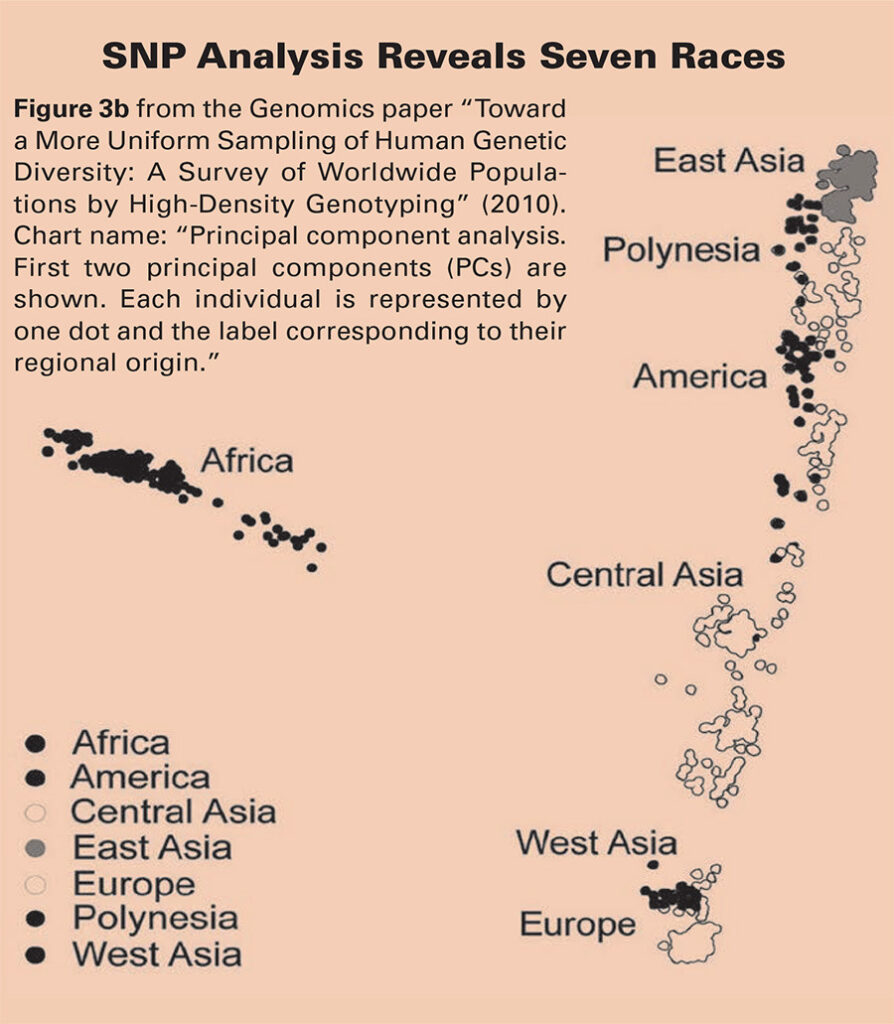
There are many genetic studies that have conclusively determined the role of SNPs in determining race, but perhaps the most significant one to date was produced by an international team of scientists in 2010.
That study, titled “Toward a More Uniform Sampling of Human Genetic Diversity: A Survey of Worldwide Populations by High-Density Genotyping,” (2) was prepared in a joint effort by 10 scientists from the University of Utah, one from the Molecular Genealogy Foundation in Utah, and three from the University of Toronto, Canada.
This study conducted its own DNA sampling from 13 worldwide populations “not covered by previous studies” and then combined them with already established and verified worldwide samples consisting of at least 250,000 SNPs from 40 populations spread around the globe on all continents.
The samples were then compared with one another to determine similarities or differences between the SNPs.
Using this method, it became possible to map just how close—or how far away—SNPs are from one another in terms of their innate composition.
The results, when projected out in schematic format, conclusively confirmed the division of humans into seven geographic divisions—a fact that was already identified by the Y and mtDNA haplogroups, and discussed above.
AFRICAN “GHOST DNA” FROM UNIDENTIFIED ORIGIN
The great distance between the African sample and the rest of the human types, as vividly illustrated in the graphic depicting SNP differences between the races, is caused by two factors: the vast physical and psychological differences between the Negroid race and all other races, and also the existence of what is known as “ghost DNA” in Africans.
This African ghost DNA was first brought to the scientific world’s attention in 2020, when a paper published in the journal Science Advances announced that around 19% of DNA sequences in West Africa come from no known human group. (3)
One of the paper’s authors, in an interview with National Public Radio surmises: “[African ghost DNA] comes from a yet-to-be-discovered group. … We do not have a clear identity for this archaic group. That is why we use the term ‘ghost.’ It does not seem to be particularly closely related to the groups from which we have genome sequences from.” (4)
A DEFINITION OF RACE
There can therefore no longer be any question that race and racial differences are genuine biological realities that are observable to the naked eye, and which are genetic in origin.
This allows for a final definition of race: a closely related group of people whose common physical appearance and psychological are determined by genetic factors alone. ❖
ENDNOTES:
This article was originally published in the March/April 2025 edition of The Barnes Review.