The United States of America has spent an incredible $4.5 trillion, has lost more than 8,000 soldiers killed and 53,000 seriously wounded, in a devastating series of 14 wars in the Middle East since 1948—all on behalf of the state of Israel.
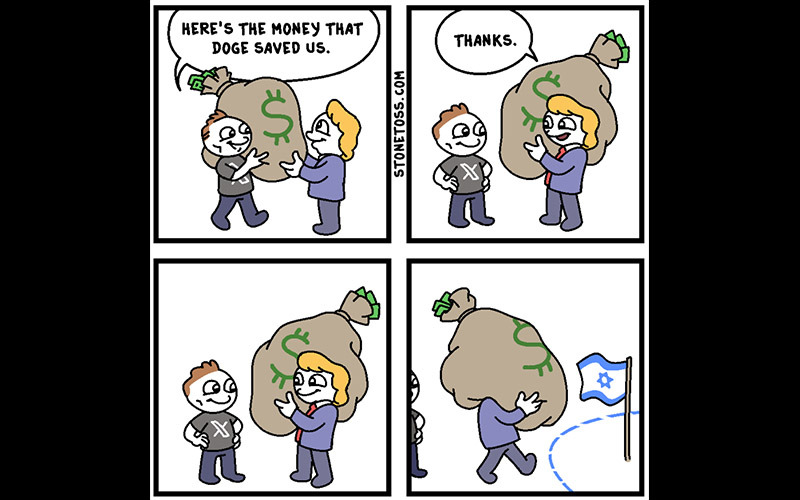
In addition, since its founding, Israel has received approximately $310 billion (inflation-adjusted) in total economic and military aid from the United States, making it the largest cumulative recipient of US “foreign aid.” (1)
These statistics are a testimony to the power of the Jewish lobby over the US Government—and also of how long their ability to direct American foreign and domestic policy has existed.
War 1: The Arab-Israeli War, 1948
On May 14, 1948, just 11 minutes after David Ben-Gurion declared the establishment of the State of Israel, the United States, under President Harry S. Truman, became the first country to officially recognize Israel.
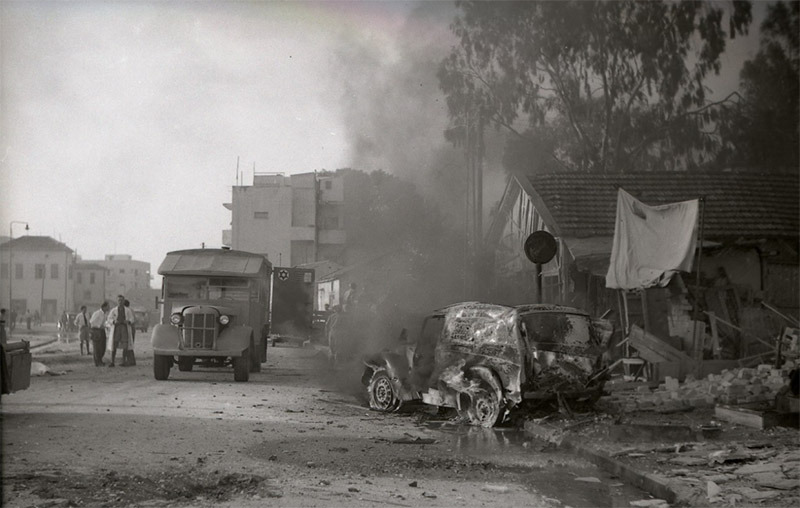
The US was also instrumental in the UN Partition Plan for Palestine (Resolution 181), adopted on November 29, 1947. This plan recommended the partition of Palestine into separate Jewish and Arab states and was a precursor to Israel’s declaration of independence.
The US imposed an arms embargo on the region, restricting the sale of weapons to both Jews and Arabs. Despite the embargo, the nascent Israeli forces acquired arms indirectly from Czechoslovakia, including rifles, machine guns, and Messerschmitt fighter planes, with tacit US acknowledgment of this arrangement.
In addition, the US Government deliberately turned a blind eye to the large number of American Jewish organizations which helped fund these arms purchases and facilitated the smuggling of weapons to Israel. These actions, illegal under the Neutrality Act (1794, as amended), went unprosecuted, as did the equally illegal participation by American Jews in the 1948 war as volunteers in the Mahal (foreign volunteers fighting for Israel).
The United Jewish Appeal (UJA) raised millions of dollars in the US, much of which went to Israel for military purposes, also in open contravention of the law, and with the tacit approval of the US Government.
Since then, the Jewish lobby’s control over US foreign policy has only strengthened. The US has utilized its veto power in the UN Security Council to block resolutions perceived as unfavorable to Israel. Since 1972, the US has vetoed at least 53 UN Security Council resolutions critical of Israel. Notably, on November 20, 2024, the US vetoed a resolution demanding an immediate cease-fire in Gaza.
War 2: The Iranian Coup d’état, 1953
By 1953, the nation of Iran had democratically elected a nationalist leader, Prime Minister Mohammad Mossadegh. His government, while not seeking direct conflict with Israel, made its support of the Palestinians clear, and provided aid in various formats to the people which Israel had displaced from Palestine.
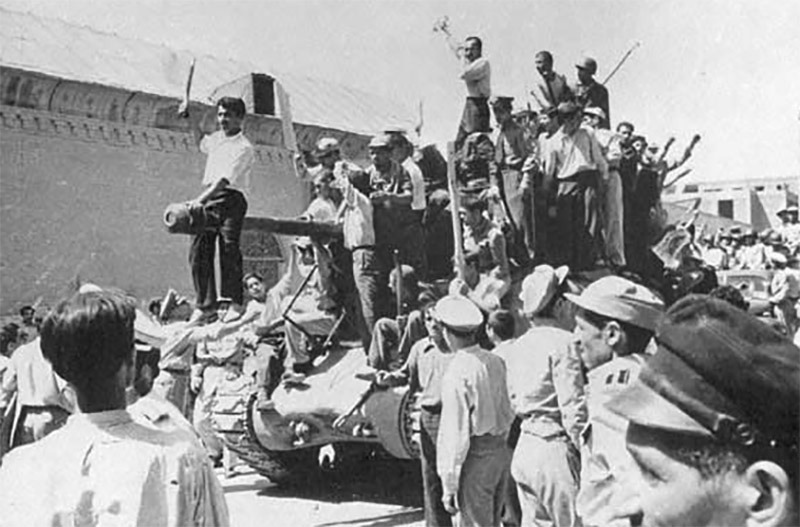
This immediately made Mossadegh a target: The CIA, along with British intelligence, orchestrated a coup code-named Operation Ajax to overthrow him, and to reinstate Shah Mohammad Reza Pahlavi. (The British primarily became involved because Mossadegh had nationalized the Anglo-Iranian Oil Company, now better known as British Petroleum, or BP).
As later revealed in CIA documents (2) which were declassified in 2013, the coup was orchestrated by CIA chief Kermit Roosevelt Jr., (a grandson of Theodore Roosevelt) and Britain’s MI6. According to the CIA papers, the cost of this exercise was approximately $1 million.
The tactics used included funding a disinformation campaign, spreading rumors to discredit Mossadegh as weak, corrupt, and pro-communist; the bribing of key Iranian officials, military officers, and politicians to support the coup; and the funding of protests and staged violent demonstrations to create chaos, portraying Mossadegh as unable to maintain order.
Finally, a coup in August 1953 saw military forces arrest Mossadegh, who was then placed under house arrest until his death in 1967.
The Shah returned to power with US and UK backing, becoming an autocratic ruler heavily reliant on Western support. The Shah then immediately established discreet military, economic, and intelligence ties with Israel, completely negating any threat to the Jewish state.
However, the Shah’s oppressive regime, supported by US arms and intelligence, fueled anti-American sentiment. This resentment ultimately culminated in the 1979 Iranian Revolution.
War 3: The Lebanon Crisis, 1958
In 1958, the government of Lebanon was under the control of a Maronite Christian, President Camille Chamoun. His pro-Western orientation and his firm opposition to Egyptian President Gamal Abdel Nasser’s pan-Arabism and the formation of the United Arab Republic (UAR) between Egypt and Syria in 1958, resulted in Lebanon establishing covert links with Israel, with the latter nation providing intelligence and logistical support, facilitated through the U.S.
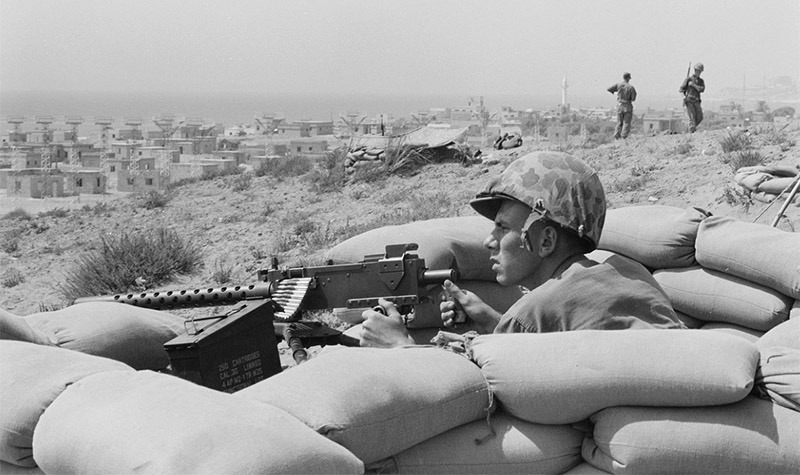
News of these links inevitably became public, and Chamoun instantly became highly unpopular with the Muslim population, which made up 60% of Lebanon in 1958. When Chamoun sought a second term in office, unrest erupted.
In order to prop up the Chamoun government, US President Dwight D. Eisenhower ordered the deployment of 14,000 US troops to Lebanon.
The crisis de-escalated with the election of a compromise candidate, General Fuad Chehab, as Lebanon’s president, followed by a peaceful transfer of power. The US intervention successfully prevented the collapse of the pro-Western Lebanese government, and the maintenance of a neutral Lebanese policy towards Israel.
The cost of the undertaking, officially known as Operation Blue Bat, was estimated by the US Department of Defense to have been $225 million. This venture also saw the first American death in combat in the Middle East, and the first three wounded.
War 4: The Six-Day War, 1967
The Six-Day War of June 1967, fought between Israel and its neighboring Arab states (Egypt, Syria, and Jordan), did not see direct US involvement—except for the infamous attack on the USS Liberty by Israel.
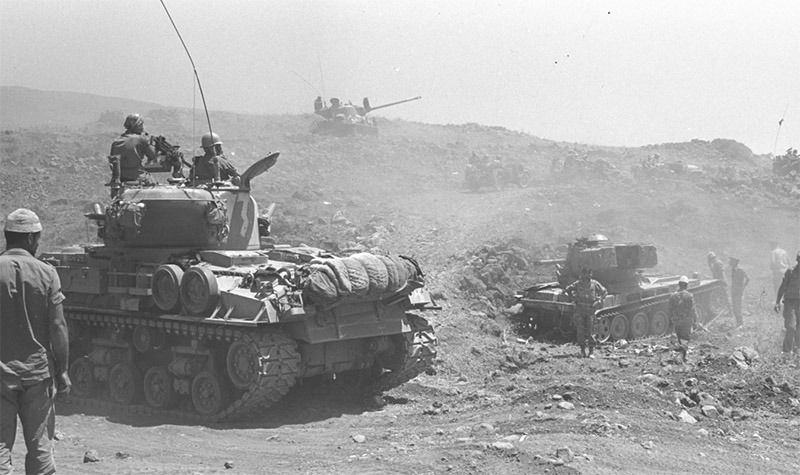
Nonetheless, the US’s diplomatic, political, and military support level involvement in the Six Day War was significant both before, during, and after the conflict, all in support of Israel.
The US provided intelligence to Israel, including satellite imagery and reports on Arab troop movements. This proved to be the most significant factor which allowed Israel to start the war with a surprise attack, as the Jewish state was in possession of a compete detailed knowledge of Arab military strength, positions, and strategies.
This war also marked the first time that the US replaced France as Israel’s primary supplier of arms. Finally, after Israel’s swift victory, the US used its veto power in the United Nations’ Security Council to block several resolutions condemning Israel for starting the unprovoked war.
American deaths resulting from the treacherous attack by Israel on the USS Liberty totaled 34. Another 171 US Servicemen were injured in the attack. Damage was estimated at approximately $10 million. Despite this act of betrayal, US support for Israel grew even stronger, and the incident was largely covered up.
War 5: The Yom Kippur War, 1973
The Yom Kippur War of October 1973 was fought between a coalition of Arab states led by Egypt and Syria against Israel. In this conflict, the US played a critical role through the provision of intelligence, military support, and diplomacy in support of Israel.
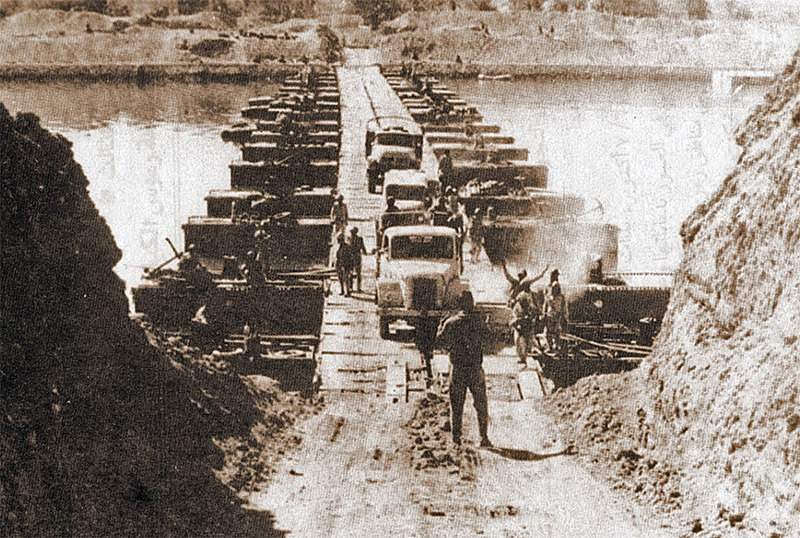
Egypt, under President Anwar Sadat, and Syria, under President Hafez al-Assad, sought to reclaim the Sinai Peninsula and the Golan Heights respectively, both territories lost to Israel in the 1967 war.
The US gave advance warnings of the Arab troop mobilizations to Israel, but despite this, the Arab forces initially made significant territorial gains.
Seeing that Israel was on the back foot, the US moved quickly to intervene. Within days, the US launched Operation Nickel Grass, a massive airlift of military supplies to Israel.
The operation delivered an estimated 22,325 tons of military equipment, including tanks, ammunition, and spare parts, all of which ensured that Israel could stave off defeat. The operation cost the US taxpayers approximately $2.2 billion.
The resupply operation was critical to Israel’s recovery from its initial losses. With US support, Israel was able to launch counteroffensives, crossing the Suez Canal into Egypt and advancing deep into Syrian territory. A ceasefire was eventually agreed.
In response to this US support for Israel, Arab members of the Organization of the Petroleum Exporting Countries (OPEC) imposed an oil embargo on the US and other Western nations in 1973. This embargo caused a global energy crisis, led to sky-high oil prices, and caused severe disruption across Western nations.
Despite this, the US government remained steadfast in its support of Israel—or rather, it remained steadfastly under the control of the Jewish lobby—and the OPEC boycott was only ended after intense diplomatic efforts by the Jewish “American” Secretary of State, Henry Kissinger.
His efforts led to the signing of the 1974 Sinai Interim Agreement which saw Egypt regain control over most of the Sinai Peninsula, and a separate ceasefire agreement between Israel and Syria. The OPEC boycott was then lifted in March 1974.
War 6: The Iran-Iraq War, 1980–1988
The downfall of the Shah of Iran in the Revolution of 1979 had temporarily weakened that state through the chaos which followed. Seeking to exploit this disorganization, Iraq, under Saddam Hussein, launched an invasion of Iran in 1980, motivated primarily by long-standing territorial disputes, particularly over the Shatt al-Arab waterway.
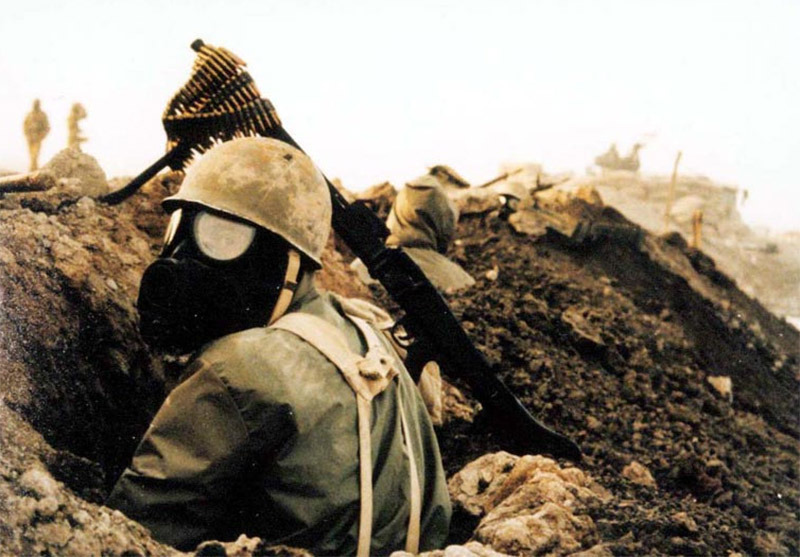
Saddam Hussein, a Sunni Muslim, also feared that the Iranian Revolution would spread and incite the majority Shia Muslim population of Iraq against him.
The US was faced with a dilemma: both Iran and Iraq were anti-Israel, and so there was, from the Jewish lobby’s point of view, no “good side” to support.
This led to an initial policy of US neutrality in the conflict, a strategy which lasted until 1982, when Iran made significant territorial gains and started advancing into Iraq.
At that stage, fueled by the increasingly vocal protests against the US and Israel in Iran, which portrayed those nations as “great” and “little” Satan respectively, the US adopted a policy of supporting Iraq, which was more secular, against Iran.
The main motivation for this decision was that the US hoped that Saddam Hussein’s willingness to be friendly towards the US could be used to change his attitude towards Israel.
As a result, the US began providing Iraq with indirect economic and military assistance, including satellite imagery and tactical information to help target Iranian forces. The US also facilitated the sale and transfer of equipment that could be used for both civilian and military purposes.
By 1983, Donald Rumsfeld, then a special envoy, visited Baghdad to meet in person with Saddam Hussein, signaling improved US-Iraq relations.
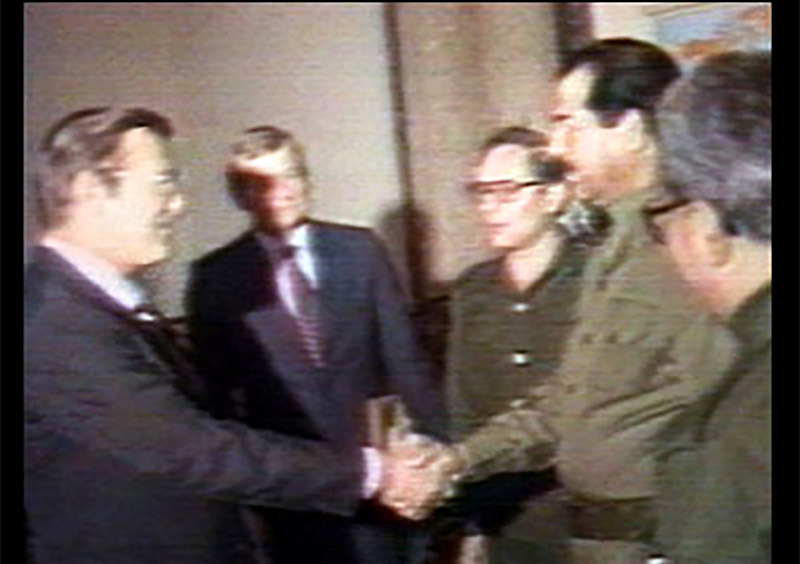
The US had also imposed an official arms embargo upon Iran, but Israeli officials, including David Kimche, Director-General of Israel’s Foreign Ministry, made a formal and secret proposal to the Reagan administration.
Kimche’s plan was to exploit divisions within the Iranian leadership and improve Israel’s regional security by influencing the war between Iran and Iraq. This could be done, he told the Reagan administration officials, by secretly selling weapons to Iran.
The US government immediately agreed to the Israeli plan—even though it was in contravention of its own official arms embargo policy against Iran.
Israel then facilitated the transfer of US-made weapons, including TOW anti-tank missiles and Hawk anti-aircraft missiles, to Iran. In some cases, Israel provided the arms directly from its stockpiles, with the understanding that the US would replenish its inventory at a later stage.
Israeli arms dealers and intelligence officials, including a “terrorism advisor” to two Israeli prime ministers, Amiram Nir, played active roles in negotiations with Iranian representatives. They coordinated logistics, ensuring weapons reached Iranian buyers while maintaining plausible deniability for the US.
The weapons were then sold to Iran at inflated prices, and the excess funds were diverted to support a “right wing” anti-Sandinista rebel group in Nicaragua, the “Contras”—all in violation of US law.
This secret program, later to become known as the “Iran-Contra Affair,” was eventually exposed and resulted in the indictment and conviction of several US officials.
While Israel’s role was integral, the Jewish state avoided any major backlash as the controlled media instead focused on the players in the Reagan administration, such as Colonel Oliver North.
The media also ignored the real meaning of the Iran-Contra Affair, namely that Israel possessed such influence within the US government that it was able to induce senior ranking officials to break their own laws to support Israeli interests.
The US involvement in the entire Iran-Iraq conflict cost in excess of $5 billion.
War 7: The Multinational Force in Lebanon, 1982–1984
By 1982, Lebanon’s ongoing internal strife had finally erupted into open warfare between various groups of Christians, Muslims, Palestinians, and Syrians.
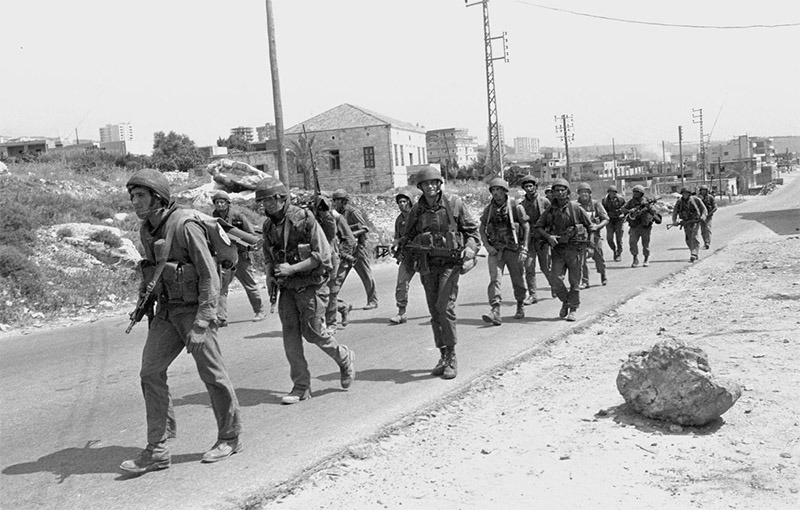
The conflict intensified after the 1982 Israeli invasion of Lebanon, which the Jewish state had launched to expel the Palestine Liberation Organization (PLO) from southern Lebanon.
The US, as usual, immediately intervened to support Israel, and created a “Multinational Force” (MNF), comprised of troops from the United States, France, Italy, and later the UK. The MNF was supposedly formed to ensure that all PLO fighters would be “evacuated” from the Lebanese capital, Beirut, following a US-brokered ceasefire.
Initially, 800 US Marines were deployed to Beirut as part of the MNF, but were withdrawn once the PLO fighters had been evacuated (to Tunisia, Yemen, Sudan, Jordan, and Syria).
A short period of peace followed, but was abruptly shattered following the assassination of Bashir Gemayel, a key Lebanese Christian leader and president-elect, in September 1982. His death triggered massacres at the Sabra and Shatila refugee camps, where Christian militias, protected by Israeli Defense Force (IDF) units, murdered hundreds of Palestinian refugees from Israel.
In response to the massacres, the MNF re-entered Beirut with an expanded mandate to stabilize the city and restore order. As US involvement grew, so did the number of American soldiers—and, simultaneously, so did anti-American hatred.
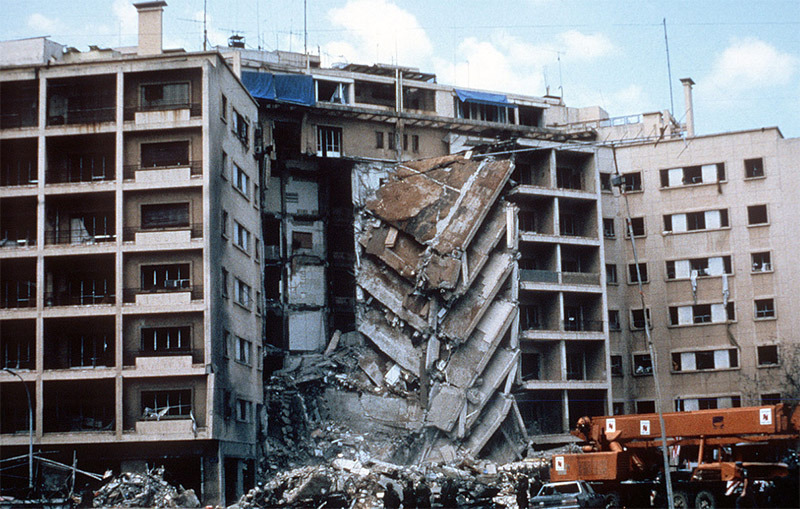
In April 1983, a truck bomb destroyed the US embassy in Beirut, killing 63 people. In response, the US Navy, positioned offshore, started bombarding those parts of Beirut and other regions of Lebanon where, it was claimed, “anti-American” (actually anti-Israeli) forces were concentrated.
These attacks did not go unanswered, and on October 23, 1983, a suicide bomber drove a truck loaded with explosives into the US Marine barracks at Beirut International Airport, killing 241 American servicemen. A simultaneous attack on the French barracks killed 58 French soldiers.
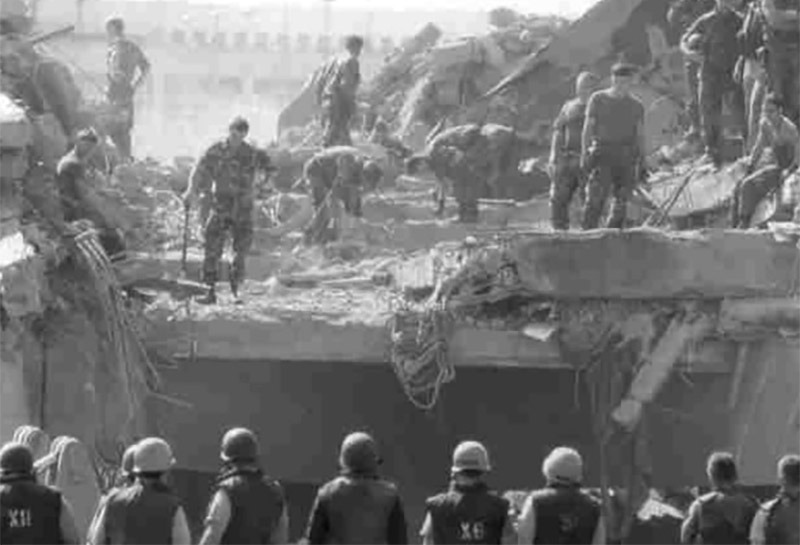
The devastating blow persuaded President Ronald Reagan to order a complete withdrawal of all American forces in February 1984. Other MNF contingents also departed soon after, leaving Lebanon in a state of turmoil.
In total, the US suffered 266 military deaths, and 146 wounded in this abortive operation. It also cost in excess of $1.2 billion.
War 8: The Gulf War, 1990–1991
In the interim, Iraq under Saddam Hussein had started providing direct material, military and financial support to the Palestinians in their ongoing war against Israel.
Iraq provided arms, ammunition, and military equipment to Palestinian militant groups such as Fatah and the Popular Front for the Liberation of Palestine (PFLP). Palestinian fighters received training in Iraqi military camps, starting after the end of the Iran-Iraq War in 1989.
The increase in active support for the Palestinians immediately made Saddam Hussein a prime target of Israeli aggression—and therefore, US aggression.
By August 1990, a major dispute between Iraq and Kuwait over oil production and debt repayment had reached breaking point. Iraq accused Kuwait of “slant-drilling” across international boundaries to tap into Iraqi oil fields, thereby stealing Iraqi resources, and harming Iraq’s economy.
When the situation was not resolved, Saddam Hussein invaded and annexed Kuwait. This was the opportunity that the US had sought, and a plan was immediately set in motion to attack Iraq.
After easily obtaining international consensus on the matter, the US deployed over half a million troops to the Gulf region, alongside forces from 34 nations.
“Operation Desert Storm” then began in January 1991 with an extensive aerial bombing campaign, followed up a month later with a land-based invasion of Kuwait. The campaign only lasted a few days, as the Iraqi forces stood no chance against the advanced weaponry deployed by the US and its allies. Even so, some 294 US personnel were killed in the 100-hour war, which cost the US Treasury $9 billion.
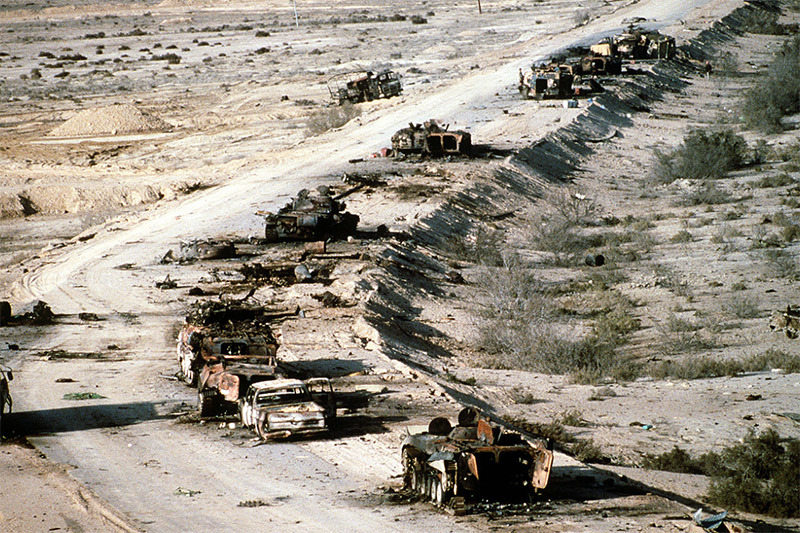
Although as always, the US’s intervention took place with the ultimate goal of protecting Israel, it was well understood on all sides that direct Israeli involvement would split the anti-Iraq alliance.
As a result, the US and Israeli leaders ensured that Israel remained on the sidelines, even when Iraq launched 39 Scud missiles at Israel in February 1991 in an attempt to provoke an Israeli response.
The Scud attack also however led to the US placing Patriot missile batteries and stationing American troops directly in Israel, marking a significant step up in American Israeli “co-operation.”
War 9: The Air War Against Iraq, 1991–2003
For the next 12 years, the US maintained an almost constant air war against Iraq, establishing “No-Fly Zones” over large parts of that nation’s territory. Along with aircraft from the UK and France, the US Air Force flew almost continual missions over Iraq, bombing anything deemed “hostile.”
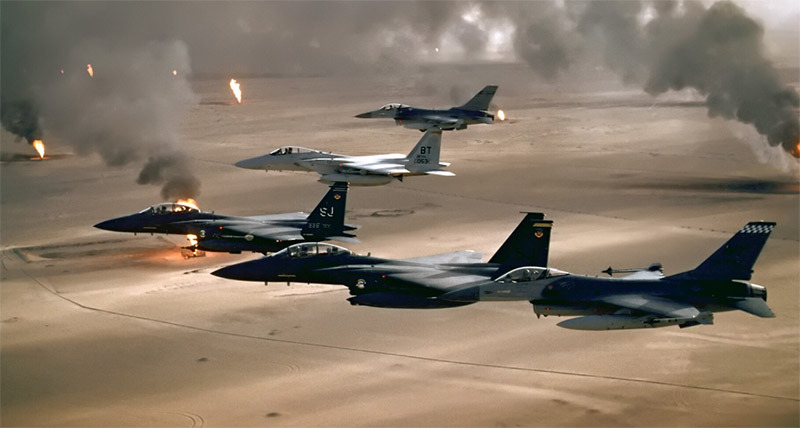
The US bases in Saudi Arabia and other Gulf states which were used to enforce the no-fly zones sparked tensions with local populations. Most notably, the Saudi Islamist Osama bin Laden and his Al-Qaeda organization specifically cited the American military presence in Saudi Arabia as a key grievance.
The no-fly zones were also not authorized by the United Nations, leading to international criticism. France stopped participating in the campaign in 1996 for this very reason.
The cost to the American Treasury for this war came to over $12 billion.
War 10: The War in Afghanistan, 2001–2021
On September 11, 2001, Bin Laden’s Al Qaeda launched a surprise—and devastating—terrorist attack upon America, destroying the World Trade Center in New York and striking the Pentagon in Washington DC with the use of hijacked airliners.
In a later statement, Bin Laden specifically stated why the attacks took place:
“The American people have chosen, consented to, and affirmed their support for the Israeli oppression of the Palestinians, the occupation and usurpation of their land, and its continuous killing, torture, punishment and expulsion of the Palestinians . . . The American people are the ones who pay the taxes which fund the planes that bomb us in Afghanistan, the tanks that strike and destroy our homes in Palestine . . . These tax dollars are given to Israel for it to continue to attack us and penetrate our lands . . . the Jews have taken control of your economy, through which they have then taken control of your media, and now control all aspects of your life making you their servants and achieving their aims at your expense . . .”(3)
Bin Laden therefore made it very clear: Al-Qaeda attacked America because it was serving Jewish interests in the Middle East, and had allowed Jews to “take control of the media” and “all aspects” of American life.
Bin Laden was living in Afghanistan in 2001, under the protection of the Taliban, when the September 11 attacks took place. The US then demanded that the Taliban hand him over and dismantle al-Qaeda’s operations in Afghanistan.
The Taliban refused, and in October 2001, the US launched “Operation Enduring Freedom”—the invasion of the vast nation of Afghanistan as part of America’s “war on terror.”
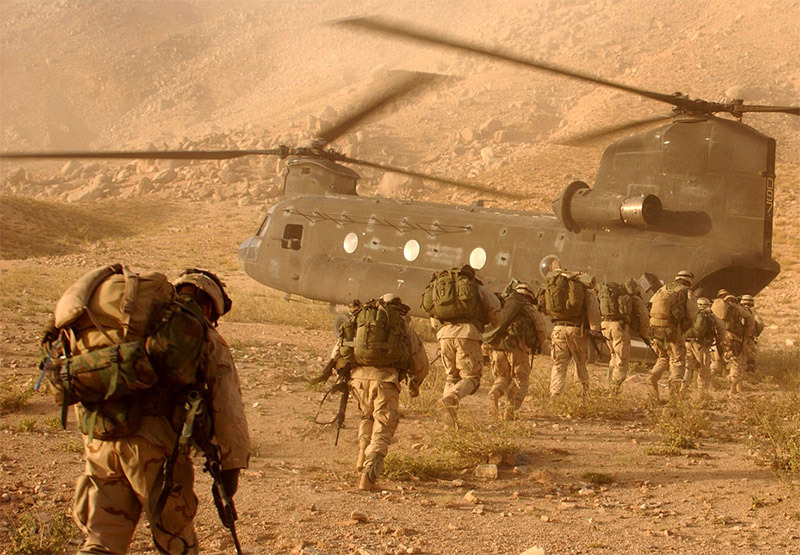
Kabul, the Afghan capital, fell within weeks, and an “Interim Afghan Government” was installed by the US to try and win over the Afghan population. Billions of US tax dollars were spent on reconstruction, infrastructure, and governance reforms.
The Taliban however had simply retreated from the cities, and, in much the same way that they had fought the Soviet Union in the 1980s, launched an insurgency war against the American and Allied occupiers.
By 2009, all efforts to quell the insurgency had failed, and in that year, President Barack Obama authorized a “surge” of 30,000 additional troops, bringing US forces to a peak of 100,000 in 2011.
All these efforts ultimately came to nothing. By 2020, the US had been forced to sign a peace agreement with the Taliban, which was followed by the chaotic withdrawal of American forces the next year. The Taliban then returned in triumph to Kabul and achieved complete victory.
Over 2,400 US troops had been killed, and more than 20,000 seriously wounded in the 20-year war. In addition, the total cost of this failed conflict came to $2.3 trillion.
War 11: The Iraq War, 2003–2011
In the interim, Iraq’s Saddam Hussein had stepped up his support for the Palestinians. When the “Second Intifada,” or young Palestinian uprising, had started in 2000, Saddam Hussein had responded by giving $25,000 in cash to the family of each Palestinian killed by Israeli forces.
This reward system caused a dramatic upsurge in attacks on Israel, as young Palestinians were encouraged to participate in the war, safe in the knowledge that if they were killed, their families would become, by Palestinian standards, extremely wealthy. This was the major reason for the dramatic upsurge in suicide bombings within Israel at the time.
This tactic gained widespread attention and condemnation from the US and Israel, and marked Saddam Hussein out for final elimination.
A staggering raft of lies were then developed by Israel and its proxies in the British and American governments to falsely link Saddam Hussein to al-Qaeda.
The British government produced a “dossier” of Iraq’s supposed crimes in February 2003, which contained a complete catalogue of Iraqi “weapons of mass destruction” (WMDs).
This dossier was later shown to have been a complete fabrication, mostly made up of decade-old lies which had literally been cut and pasted off the internet.
US Secretary of state Colin Powell used material from this fake dossier during his infamous February 2003 presentation to the United Nations Security Council, along with equally fabricated “intelligence” including photographs of old Iraqi trucks which he claimed before the UN were “mobile chemical weapons laboratories.”
President George W. Bush in person announced that Iraq had tried to buy “uranium from Africa” with the intention of making a nuclear weapon. The documents he quoted from were all later shown to be Israeli-origin fakes.
Based on these lies, and without UN permission, the US and its allies launched what they called “Operation Iraqi Freedom” in March 2003.
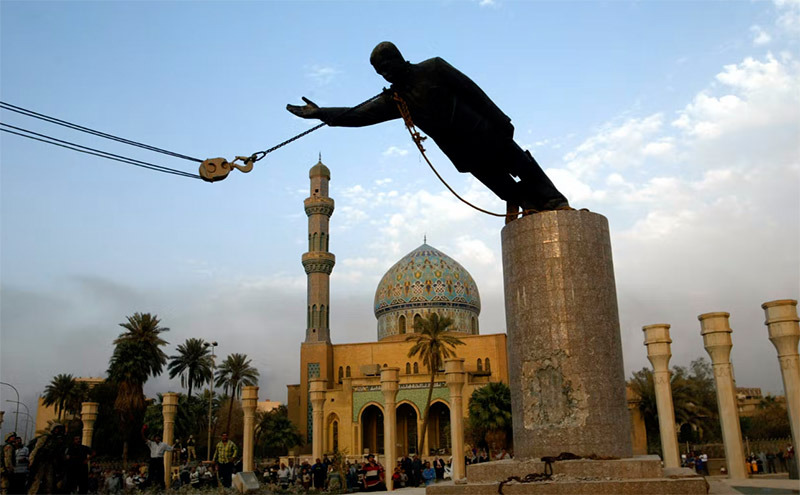
This campaign saw Iraq physically invaded and destroyed, with Saddam Hussein eventually being captured and executed after being handed over to tribal enemies.
Needless to say, no WMDs were ever found in Iraq. The entire war had been based on a lie, and its true motivation—that of destroying an enemy of Israel—was swept under the carpet. It was no coincidence that the Palestinian suicide bombing campaign in Israel completely halted after the invasion of Iraq.
Iraq collapsed in anarchy, with disaffected Sunnis, former government loyalists, and Islamist groups, including al-Qaeda in Iraq (AQI), launching an extended insurgency war against the American-led forces and their puppet Iraqi government. The latter organization, being under the control of the US military, was, of course, neutral towards Israel.
By 2006, US casualties had exceeded 2,500 deaths, with no clear path to stability. President George W. Bush announced a surge of 30,000 additional troops in that year, also to no avail.
The US officially ended combat operations in August 2010, and finally withdrew in 2011, leaving Iraq effectively in ruins and having killed approximately one million Iraqis in the process.
Over 4,500 US service members were killed in the war, and more than 32,000 were wounded. The US spent an estimated $2 trillion on the war and its aftermath—all just to destroy Saddam Hussein’s government because it had funded Palestinian resistance to Israel.
Furthermore, the power vacuum left by Saddam Hussein’s fall and the marginalization of Sunnis contributed directly to the rise of the Islamic State (ISIS) in 2014.
War 12: The Syrian Civil War, 2011–2025
With Iraq destroyed, the next most powerful enemy on the US-Israeli hitlist was Syria.
That nation, under the leadership of Bashar al-Assad and his father, had maintained a long-standing policy of opposition to Israeli aggression, and support for the Palestinians.
In particular, Syria’s al-Assad was known for his close links to Gaza’s Hamas and Lebanon’s Hezbollah—an alliance which put Syria firmly into the international Jewish lobby’s crosshairs.
In March 2011, protests erupted in Syria as part of the “Arab Spring.” This “democracy movement” in the Arab world turned out to have been fed and sustained by, among others, two Bush administration funded “pro-democracy” groups, the “Middle East Partnership Initiative,” (MEPI) and the “Freedom Agenda.”
These programs, obviously intended to destabilize Arab states, succeeded for a while in disrupting many of the target nations, and victims included the longtime enemy of Israel, Muammar Gaddafi, among others.
In Syria, the “protests” quickly and mysteriously—as the protestors acquired large amounts of weapons seemingly “out of nowhere”—developed into a full-blown civil war.
By 2013, the US had directly intervened in the conflict, providing weapons to the Syrian “rebels” through covert programs like the CIA’s Timber Sycamore initiative. Large numbers of these weapons went straight to ISIS in eastern Syria.
Next, a series of fake allegations surfaced claiming that Syria had used chemical weapons against civilians—directly echoing the fake WMD allegations made against Saddam Hussein.
The al-Assad government denied all the allegations, and allowed international inspectors in to review the claims. No evidence was ever found to back them up.
In an attempt to halt the lies, the Syrian government, which had always acknowledged that it possessed chemical weapons, but had never used them, then voluntarily agreed to dismantle all such facilities under a US-Russia brokered agreement. Despite this, the claims of “chemical attacks” persisted.
As a result of the war, Syria’s ability to confront Israel directly was considerably weakened, and the government’s main focus switched to fighting internal enemies, and the organization ISIS which had emerged from the American destruction of Iraq.
Syria was able to call on its allies, Iran and Lebanon’s Hezbollah, to help fight the ISIS threat, and large numbers of soldiers from both Iran’s Revolutionary Guard (IRG) and Hezbollah played an important role in the ultimate defeat of ISIS.
However, the presence of these latter two groups in Syria provided Israel with an “excuse” to start a protracted bombing campaign against that nation.
In reality, the Israeli bombing—conducted with US supplied aircraft and weaponry—was indiscriminate and clearly designed to weaken the Syrian state.
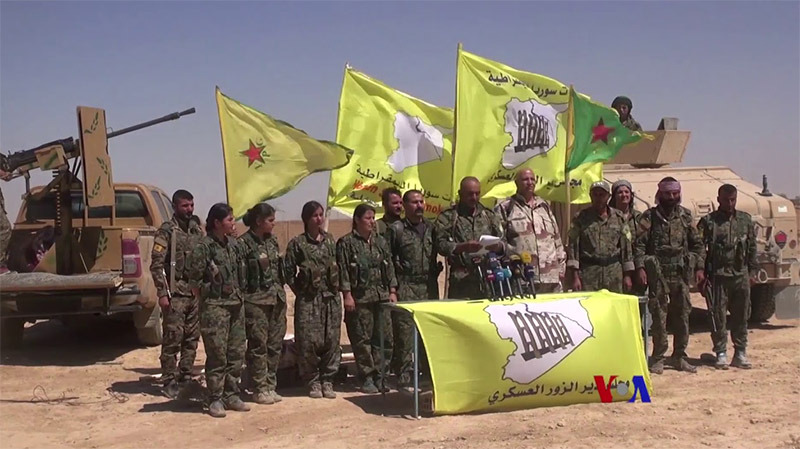
The US then committed ground troops to the war in Syria in support of the “rebels” who had been formed into the “Syrian Democratic Forces” (SDF). At its peak, the US had about 2,000 troops in Syria, primarily in northeastern areas controlled by the SDF.
Small numbers of US troops remain there to the present day, even though, with the aid of Hezbollah, the IRG, and eventually Russia, the Syrian government was initially able to defeat all the major Islamist groups. However, eventually the Syrian state’s resources were exahsuted, and todayt Syria is under the control of the “rebels.”
For its part, Israel has conducted hundreds of airstrikes in Syria and provided direct support to Syrian “rebels” operating near the Israeli-Syrian border. Israeli hospitals also provided free treatment to wounded “rebels,” and Israeli special forces have regularly undertaken covert operations inside Syria.
US involvement in the Syrian “civil war” has to date cost the US Treasury some $54 billion.
War 13: The Yemen Civil War, 2015–Present
The southernmost state on the Saudi Arabian Peninsula, Yemen, was shaken in 2012 by “Arab Spring” protests against President Ali Abdullah Saleh. He resigned rather than battle on. His successor, Abdrabbuh Mansur Hadi, also found it impossible to keep a hold on the reins of power.
A Shia Muslim tribe in the north, the Houthis, took advantage of the power vacuum to seize control of northern Yemen, including the capital, Sanaa, in 2014.
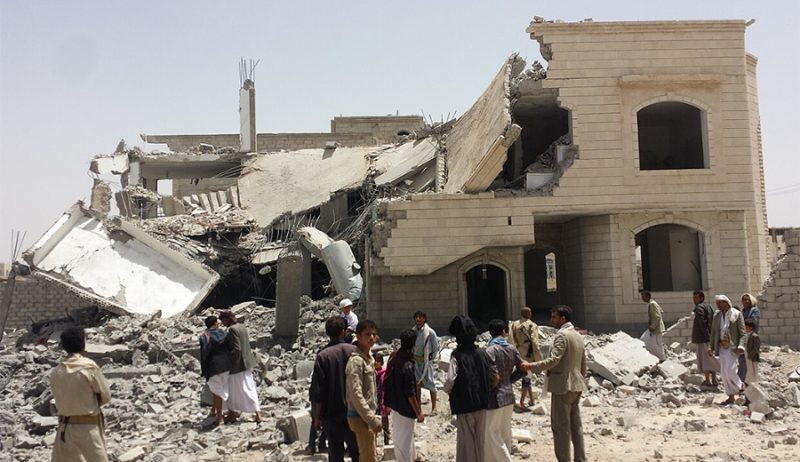
In March 2015, a Saudi-led coalition intervened militarily to restore Hadi’s government. The war then became a proxy conflict between Saudi Arabia and Iran, two longtime foes in the Muslim world.
The involvement of Iran in this conflict was the signal for US intervention, acting, as always, on behalf of Israel to “contain Iranian expansion.”
The US has provided billions of dollars in arms to Saudi Arabia and the United Arab Emirates (UAE), including advanced fighter jets, precision-guided munitions, and air defense systems, all of which have been used in the war in Yemen.
US personnel also provide logistical and intelligence support for Saudi-led airstrikes, including targeting assistance and aerial refueling missions—despite those bombings being indiscriminate and causing significant civilian casualties.
In addition, starting with the Obama administration, hundreds of US cruise missile strikes have been launched against targets in Yemen, often inflicting devastating civilian casualties and inciting the local population further against America and the West in general.
This is the primary reason why the Houthis opened a front against Israel and western shipping in the Gulf after the events of October 7, 2023.
So far, US involvement in Yemen has cost the Treasury some $5 billion, in direct intervention and “aid.”
War 14: Military Aid to Israel after October 7, 2023
Since the Hamas attack on Israel of October 7, 2023, the US has significantly increased military aid to the Jewish state. Weapons supplied and paid for by the US taxpayer have included at least 5,000 unguided Mk82 bombs, 5,400 Mk84 bombs, 1,000 small-diameter GBU-39 bombs, and 57,000 rounds of 155mm artillery shells, tens of thousands of smaller caliber rounds, and in excess of 14,000 tank shells. (4)
All of these weapons have been used to smash and bomb Gaza to smithereens, and kill over 50,000 Palestinians, including thousands of children. Over 104,000 Gazans have been seriously injured.
The real toll is likely higher, according to the Palestinian Health Ministry, as thousands of bodies are buried in the rubble of what remains of Gaza.
Combining direct military aid and arms sales, the total US aid to Israel since October 7, 2023, has amounted to approximately $33.18 billion. (5) This figure does not include assistance after the second election of U.S. President Donald Trump.
Not One War in America’s Interests
These 14 wars, their human and financial cost, when reviewed as a single narrative, are shocking. However, it is even more tragic when it is realized that not one of these wars have been waged to protect Americans, or American interests.
Every single one of them, every soldier killed, and every dollar spent, has been for the benefit of Israel alone.
Sources
(1) “US Foreign Aid to Israel,” Congressional Research Service (CRS), Washington DC, Mar. 1, 2023.
(2) “CIA Confirms Role in 1953 Iran Coup,” National Security Archive, August 19, 2013.
(3) Letter to the American People, Osama bin Laden, November 2002.
(4) “US Aid to Israel in Four Charts,” Council on Foreign Relations, November 13, 2024; “US Moves Forward With $680 Million Arms Sale to Israel,” The Wall Street Journal, November 27, 2024.
(5) “US approves $20B weapons sale to Israel as fears grow of wider war in the Middle East,” New York Post, August 14, 2024.
This article originally appeared in The Barnes Review, January/February 2025. To see what else you are missing, subscribe to The Barnes Review today.